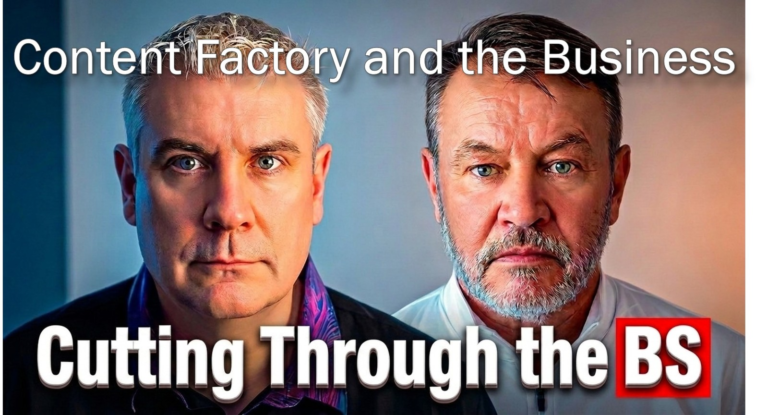
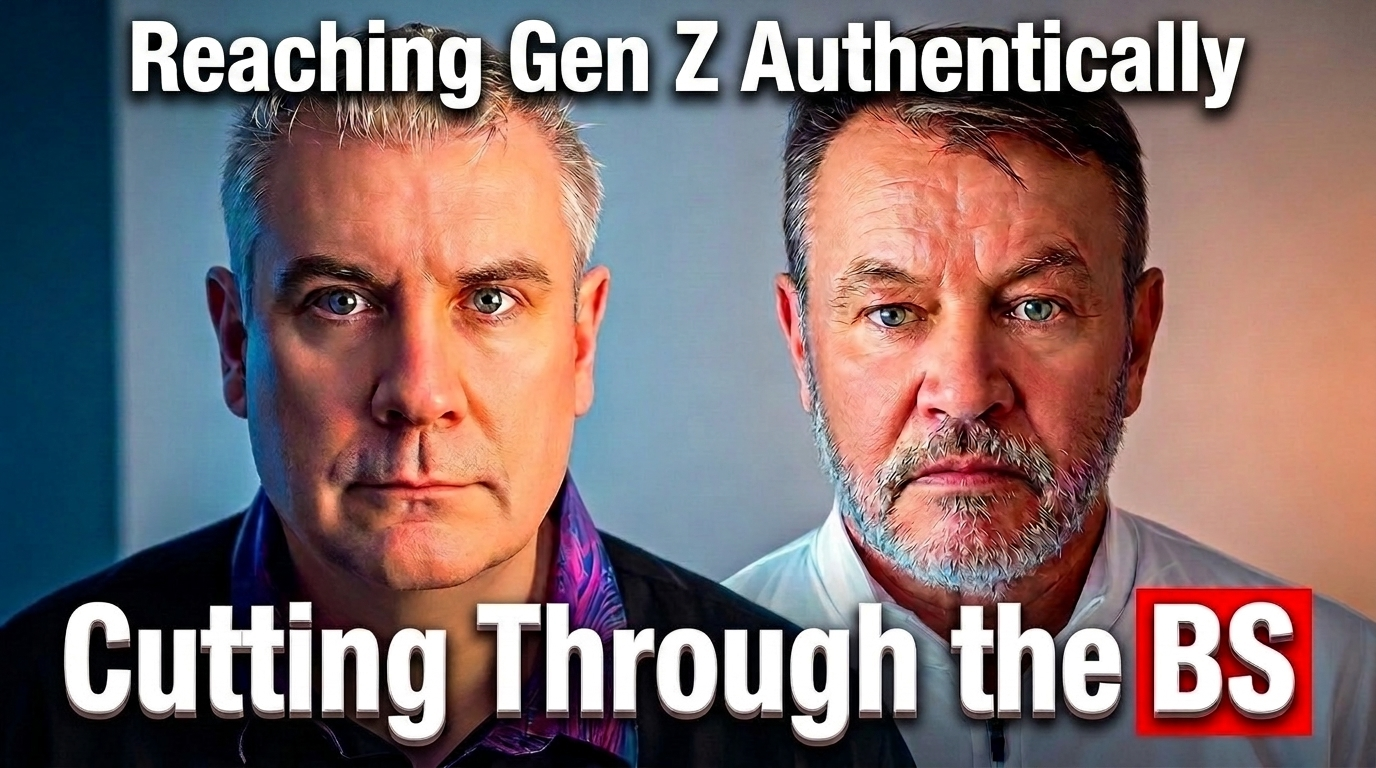
Cutting Through the BS of Corporate Video! Episode 4 | Reaching Gen Z Authentically
Here we are again with Episode 4 in our series on “Cutting Through the BS of Corporate Video“!
In this episode, together with Jeff Sengpiehl, The Post Doctor, we turn to two questions every Enterprise Video Content Factory eventually has to answer: how do you reach audiences who assume everything gets remixed, and how do you protect your brand when AI-generated slop is everywhere? We get into what Gen Z and Gen Alpha actually expect from corporate content, why authenticity beats polish, and how C2PA is becoming the standard for proving what’s real.
Watch the episode here (don’t forget to share, like, subscribe, etc.!):
Join the discussion on Varde’s LinkedIn page and stay tuned for the upcoming episodes where we also bring in manufacturers and end-customers!
Takeaways
- Remix culture sets the baseline expectation for younger audiences. If a team can’t locate its own source footage quickly, it is effectively worthless to that culture.
- Authenticity outperforms polish. A consistent point of view beats a committee-approved safe cut, every time.
- AI detection carries a real brand cost. Audiences that spot machine-generated content dismiss the message entirely.
- C2PA, the Coalition for Content Provenance and Authenticity, is the leading industry standard for tracking content origin, modification, and AI involvement through the supply chain.
- Provenance credentials are fragile. A transcode step that does not preserve them breaks the chain of trust from that point forward.
- Provenance is what makes limited AI use defensible. It lets an organization disclose exactly what was altered while standing behind everything else as authentic.
Full transcript
Lightly edited for readability. Filler words and false starts removed.
Introductions (0:07)
Jeff Sengpiehl: Jeff Sengpiehl. I’ve got decades in media technology, starting back at ABC and going all the way into AI. Along the way, broadcast engineering, post-production, systems integration, facilities build-out. I’ve had CTO and high-level engineering roles across post and storage: Light Iron, Chainsaw, KeyCode, Qualstar. Today I’m working as a consultant and fractional CTO as The Post Doctor. It’s vendor neutral, focused on production, post, infrastructure, live storage, asset management, expanding markets, and workflow integration. I’ve been involved with SMPTE, HPA, and SBE. I also publish and podcast under The Post Doctor.
Eivind Sandstrand: And I’m the founder and principal at Varde Media Solutions. Varde is a new, small, but growing little boutique consulting outfit. We’re also a solution reseller and a solution builder, as opposed to a traditional systems integrator. What’s unique about us is that we focus exclusively on non-broadcast clients. What we do is help our customers build the kind of media operation they truly need in order to meet the actual business objectives of creating, managing, and publishing the content, without dragging them down that rabbit hole of traditional broadcast engineering. And those of you who know what I mean by that, you know what I mean by that.
Reaching Gen Z and new audiences (1:29)
Jeff: So speaking now of content reaching audiences. What about reaching the next ones, Gen Z and new audiences? How can the content factory help us doing that?
Eivind: Help us, or the marketing teams, reach these whippersnappers and Gen Alphas coming up too. I think the thing here is there’s a baseline expectation for remix culture. They assume that anything content-wise is going to be reused, referenced, built on. And if a team can’t locate its own source footage quickly, it’s worthless. You’re going to lose that cultural window entirely.
And this also goes to it: it doesn’t matter where the team is located, or a sensitivity to lag. The audience doesn’t care how you work, only that the output landed on time, on tone. And then you just got to make sure that if there’s an error, you account for it publicly, especially if there’s comments available on a video. People are going to blast you faster than corrections can catch up. So that’s going to make the cost of each one of those errors pop up in versioning.
And there’s an expectation of what’s called asynchronous responsiveness. This generation is online often, but predictably not at the same time as the team producing the content. So your workflow can’t depend on everyone being available at the same time. And I think the other thing here is authenticity beats polish.
Jeff: Yeah.
As long as you’ve got a clear, consistent point of view, it’s going to outperform the committee-approved safe cut that came out of the conference room, every single time.
Eivind Sandstrand
Eivind: As long as you’ve got a clear, consistent point of view, it’s going to outperform the committee-approved safe cut that came out of the conference room, every single time.
Jeff: Yeah. No, I think that last point is crucial, and my conversations with my own whippersnappers confirm it. And going back a little bit to what we talked about in an earlier segment about AI: it may look good technically, but the moment some of these audiences detect that, hey, this was actually machine generated, they just dismiss everything. And it hurts your brand, and it hurts that message conveyance.
But the content factory has a lot of technology features that can help with this too. First of all, it’s a single source of feedback instead of scattered email, Slack, and PDF threads. As you’re making it, everyone’s working inside of the same space. You have the ability to go in and, with pinpoint position, work on frame-accurate comments inside, so you can say you need to change this, edit this, improve upon this. That’s possible using this kind of a factory.
Searching that goes beyond just the file name, finding the stuff, and making sure this is tagged the right way so it can be reused, version controlled. You mentioned being able to work in a browser from anywhere, preferably with no VPN or those kinds of things, since they tend to create problems whatever your storage strategy is, hybrid, cloud, on-premise, these solutions can work with this. And this is one of those areas where, when we build your content factory, we really do need to play on the same team as IT. Even though they may not own video operations, they know what network security is going to be, and we want to work with all this.
And then permissions, making sure people only have access to what they need to. Audit trail so you can track it, automating handoffs between people, and so forth. There’s a lot of different feature points of a content factory that perhaps a lot of corporate video operations today are not familiar with, because they work in unsuitable tools.
Jeff: Yep. And each one of those things you just mentioned is a cultural problem.
Eivind: Each one of the fixes is an infrastructure answer. That’s the whole thesis of what we’re talking about here. There are ways to fix, with technology, the cultural and other problems inside of an organization’s video stack. That’s why we’re here.
Brand protection, AI slop, and C2PA (5:58)
Jeff: So in a time when fake information and AI-generated slop are everywhere, how is a content factory going to help this out?
Eivind: Protecting the brand is of ultimate importance to any kind of corporation or organization. Without a trusted brand, your business is at risk. That’s just a fact of doing business today. And the only real way to combat viewer fatigue is to create authentic content. We can’t combat it by creating more fake content.
The only real way to combat viewer fatigue is to create authentic content. We can’t combat it by creating more fake content.
Eivind Sandstrand
The incoming generations tell us that. All research tells us that. And the fact that one guy can sit and generate 600 AI books and have them published on Amazon in a few months means we can’t keep up with that. So this content that you’re generating needs to be verified as coming from an authentic source, locked down, understood.
There’s an initiative out there, an industry-wide project with all the big players: Meta, Microsoft, Google, and a whole bunch of others, plus a whole bunch of smaller tech manufacturers and publishers. They’ve developed together something they call C2PA, the Coalition for Content Provenance and Authenticity. That initiative provides a technical standard for publishers, creators, and consumers, so that anyone at any point in the factory or the delivery chain can go and see where this content is coming from. Is it generated by an AI source or a reputable source, for instance a company or a newspaper? Or even see what camera it’s coming from, or was it generated by something synthetic? And very importantly, has it been modified along the way?
There are clever little mechanisms that will flag it in the video player being used, so you can actually see, hey, this has an issue. Hopefully this will help, but we need to train the next generation to use and appreciate this as well. At the moment it’s the best initiative that’s out there. It’s not without its challenges, but it definitely is something I have a lot of hopes for. And the content factory needs to support this from the intake point to the delivery point. Anything that’s under its purview, the content factory needs to support that C2PA standard.
Jeff: Yep. And that C2PA credential follows it all the way through. And if the supply chain gets to a point where, oh, we’re going to transcode this to XYZ format because we need that, and you lose that credential, it’s no longer linked. You know that the provenance on the shot is there, but everything after that point, you’ve got no data on.
Eivind: So it’s important to design the workflow properly, to make sure that fragile metadata doesn’t get lost or trampled on in the process. It’s not really a standards process problem, and this entire brand protection with authenticity and provenance is going to matter more and more as we go forward. And the content factory is going to need those tools and processes that support it end to end, like you were saying.
Provenance, being able to prove that your stuff is real, is actually the thing that’s going to let you use AI in certain things.
Jeff Sengpiehl
Jeff: Yeah, yeah. And it connects back to the whole AI conversation. Provenance, being able to prove that your stuff is real, is actually the thing that’s going to let you use AI in certain things. Because you have the chance now to tell people, hey, you know what, I did fill in an artificial background behind the CEO because he stood in front of an office wall, but otherwise everything else is authentic, and you can see that from these certificates that follow it.
Coming up (9:09)
Eivind: In the coming episodes, we’ll be bringing in some manufacturers and some integrators. Let’s show what we’re talking about rather than just describing it. Please hit those like and subscribe buttons. And if you’ve got questions about the concepts around this, please hit us up in the comments. Both of us will have our contact information popping up shortly, and we look forward to hearing from you. Thanks for joining us here today.
Jeff: Thank you very much, everyone.