NAB Show 2026, Day 4: The Last Four, and What Four Days Actually Taught Me
April 2026 | Las Vegas Convention Center
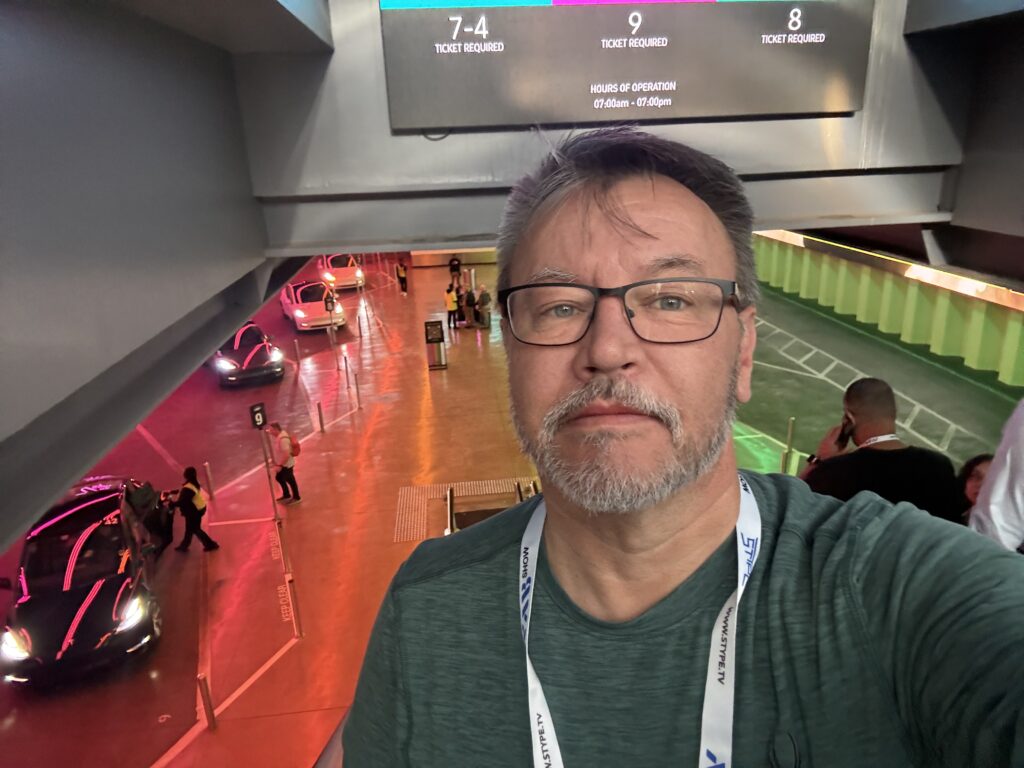
The final day of NAB is always a little lighter on the floor. Affectionately known as “Vendor Day”, a travel day for me, and often also for exhibitors who are mentally halfway to the airport. But the conversations get more candid, and that suits me fine.
By Day 4, I had visited enough booths across enough categories to shape some viewpoints about what I saw, and I will share those at the end of this piece. First, the four companies I visited – some would even say saving the best for last!
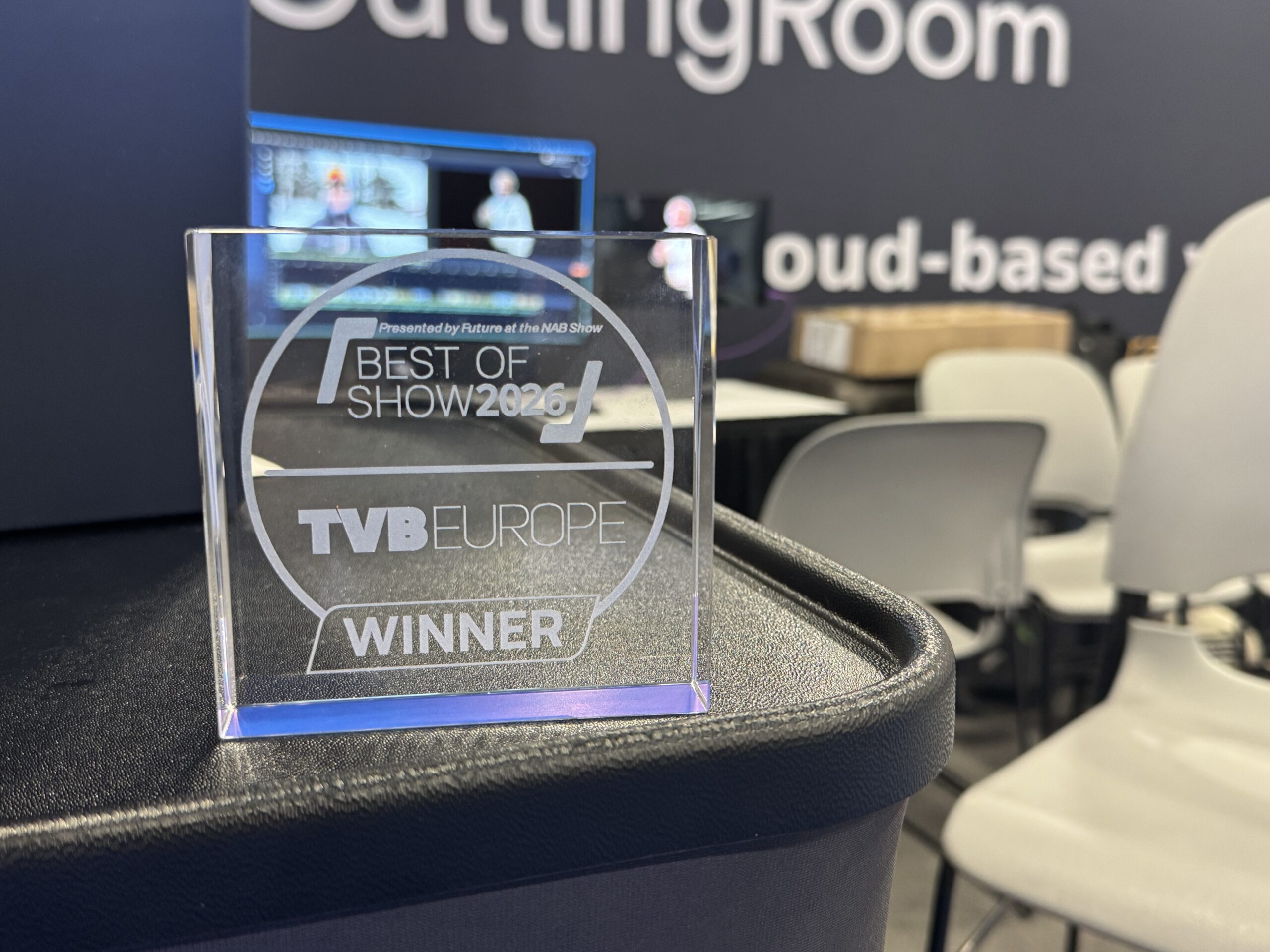
CuttingRoom – Browser-Based Editing That Is Closer to Finished Than You Think

CuttingRoom is a Bergen, Norway-based company making a cloud-native, browser-based video editing and publishing platform. No software to install. No hardware required. Just a browser, a license, and a connection. And an iPhone if you’d like to install the companion app, “Reporter”.
CuttingRoom lets you capture content directly from live streams, their iPhone app, or connected cloud sources / storages, and collaborate in real-time when editing, with integrations to upload footage directly to cloud MAMs and storage platforms.
The platform is designed for teams that need to move from capture to published video quickly and want to deliver outputs to social, web, and linear channels simultaneously from a single timeline.
With the latest AI-editing feature, “Shortcuts”, it is now possible to “talk to edit” and have the tool perform sophisticated editing operations via voice control or text prompts!
The reason CuttingRoom belongs at an enterprise level is straightforward: This greatly simplifies things. Where other editing tools are complex and expensive (to acquire and/or operate), CuttingRoom requires nothing but a browser. Where applications from Adobe, Avid, Black Magic, Grass Valley, etc. are loaded with features, CuttingRoom can be “embedded and tailored” with specific functions included or omitted, all depending on the users’ needs.
For enterprise organizations that need non-specialist team members to create and publish video content – Corporate Comms, HR, L&D, Marketing, CuttingRoom’s browser-based approach removes a significant operational and budgetary barrier.
Hiscale – Video Transcoding Without the Iron Ceiling
From Cologne, Germany comes Varde partner Hiscale with their FLICS, a flexible transcoding platform for video processing across file-based, live, and VOD workflows. On premise, hybrid, or cloud.
Transcoding (converting video from one format to another) is one of those infrastructure functions that is invisible when it works and catastrophic when it does not. Most organizations that produce significant video either deal with transcoding friction or have paid too much to avoid it.
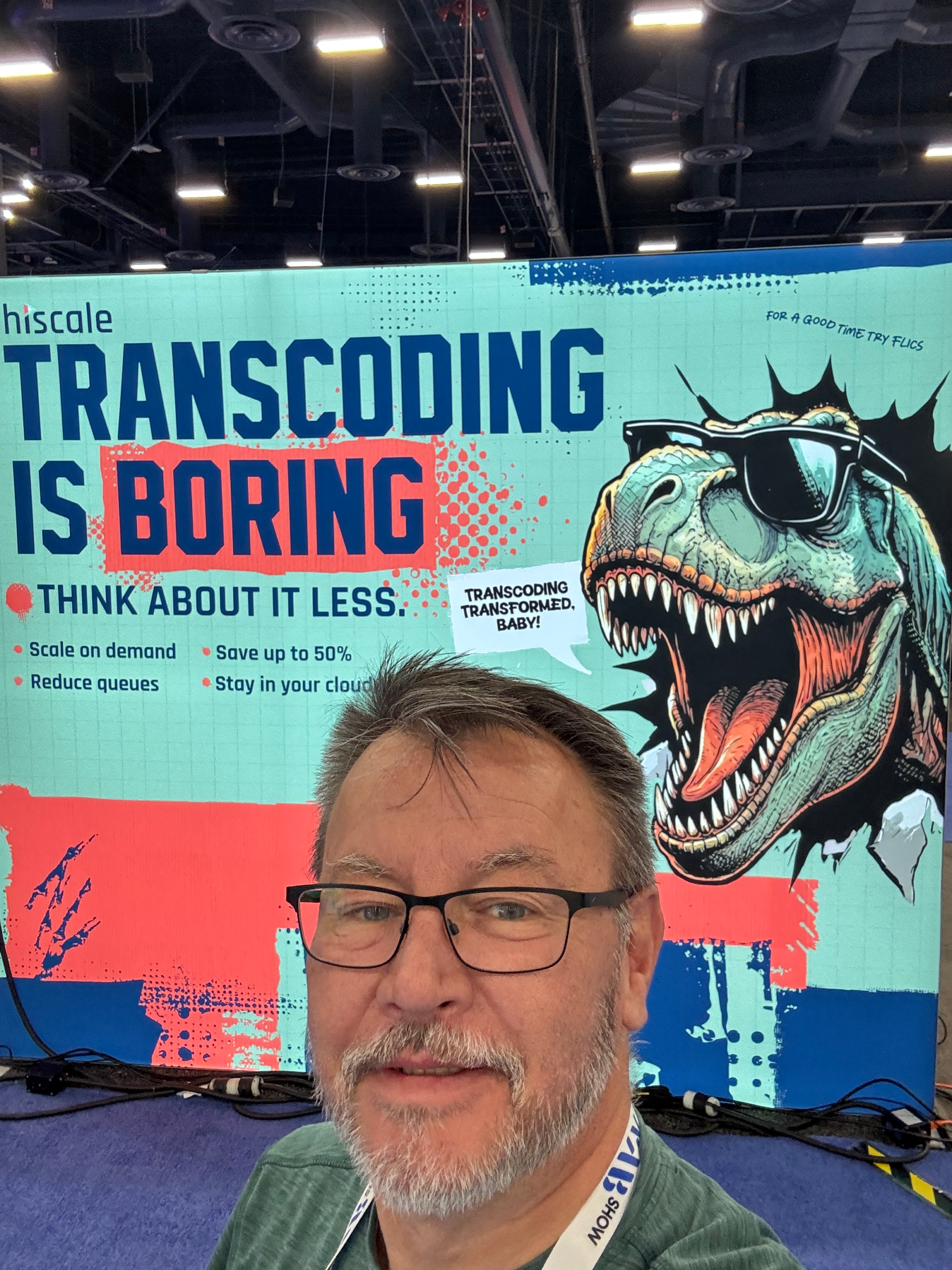
FLICS is designed for elastic load handling. It processes and distributes media at the scale of real-time needs while keeping ownership of your infrastructure or pipeline. The system can scale up when jobs pour in, scale down when things are quiet, and deploy across cloud, on-premise, or hybrid systems.
Also announced and demonstrated, the free Hiscale AGENT app which can offload and ingest media with verified transfers of every file, bit-for-bit. After processing jobs in a managed queue, the AGENT can “hand off” files to a transcoding workflow in FLICS or to a folder or connected systems.
For enterprise video teams, the relevant question is whether your current video pipeline handles format conversion automatically or whether someone is manually babysitting that process. If it is the latter, Hiscale is worth a conversation.
Fonn Group – Building the Full Storytelling Stack Beneath the Bergen Mountains

Fonn Group is a Bergen, Norway-based investment and operating company that owns a portfolio of media technology products. Mimir (cloud-native MAM and production platform) and Saga (newsroom and storytelling platform) were front and central on their stand, along with sibling and partner companies.
Mimir, a Varde partner, is a cloud-native media collaboration and production platform – often described as a MAM/PAM/DAM – that manages live videos, clips, images, and audio files, using AI for automatic metadata logging to power unbeaten search capabilities.
At NAB 2026, Mimir showed Cutter, the browser-based editing tool that eliminates the download-edit-upload cycle, and their new mobile ingest app for field contributors.

Saga’s new capabilities at NAB 2026 focused on newsroom efficiency with real-time story sync, mobile editing, and seamless multi-station coordination.
What distinguishes Fonn Group’s positioning is that they are building from the storytelling problem backward, rather than from the infrastructure forward. Saga starts with the journalist and the story. Mimir provides the media.
For enterprise clients, Mimir delivers the asset management and search foundation that most organizations are missing, making it the most applicable product in the Fonn portfolio. Saga is primarily a newsroom tool, but similar to the Belgium-based counterpart we visited on Day 1, we’re beginning to see how corporations and institutions can use these tools for planning, creation and execution of many different forms of content – “Stories”.
Grass Valley — Broadcast Infrastructure Doing Its Best to Speak Enterprise
Grass Valley is another one of the pillars of modern broadcast technology with cameras, production switchers, routing, signal processing, and their AMPP cloud-native production platform. At NAB 2026, the main story was about infrastructure convergence: bringing SDI legacy hardware, IP-based production, and cloud workflows into a single operational layer.
Grass Valley also hosted a panel at NAB titled “From Corporate Video to In-House Studio: How Enterprises Are Becoming Media Machines.” The fact that Grass Valley dedicated a formal panel to the enterprise segment reflects where they see growth coming from.
AMPP OS now natively supports NDI 6.3 and Dante audio, along with contribution sources from TVU MediaMesh and participant video via Zoom ISOcloud, reducing receiver hardware requirements – all potentially important integration points for enterprise-grade AV technology.
My assessment: Grass Valley makes excellent broadcast infrastructure. The AMPP platform is genuinely impressive in its ambition to unify a fragmented production environment.
But the language, the sales motion, and the typical deployment model are still shaped around the broadcaster’s world. Enterprise buyers will need a knowledgeable intermediary to extract the relevant value from what Grass Valley – and Evertz, Ross Video, EVS, and others for that matter – offers and translate it into something their IT team and their budget approval process can recognize.
What Four Days at NAB 2026 Actually Taught Me
I want to close this series with something more direct than a summary.
Corporate video has arrived at NAB – but not to solve the same problem.
More than 13K NAB attendees reported that they are corporate media professionals. Almost double the 2025 number. NAB added a dedicated Enterprise Video Track for Fortune 1000 teams building in-house studios. The show’s vocabulary is shifting. More vendors now use the words “enterprise,” “corporate,” and “non-broadcast” in their booth messaging than at any show I can remember.
But attendance and vocabulary do not automatically translate into solutions that fit. What I observed across four days is that the enterprise buyer and the broadcast buyer share some tools and share no operating context whatsoever. A broadcaster knows what a MAM is. They understand signal chains. They have an engineering team that speaks this language fluently. An enterprise buyer – the VP of Corp Comms, the Head of L&D, the CIO evaluating a video platform – has none of that background. They have business problems that happen to involve video.
The gap between those two starting points is large, and most of the vendors on this floor have not fully bridged it. They have added enterprise language to broadcast-native products. That is not the same as building for enterprise buyers, and experienced enterprise buyers will sense the difference in the first conversation.
Broadcast engineering is not enterprise video strategy.
The show floor is full of technology that can, in theory, solve enterprise video problems. But the way that technology is typically scoped, configured, and deployed assumes an engineering-led buyer with time, technical staff, and a tolerance for complexity that most corporate buyers do not have.
The vendors that impressed me most across these four days were not the ones with the most sophisticated technology. They were the ones who came into conversations with questions before answers. The ones who wanted to understand the workflow before recommending a product. The ones who could explain what they do in plain language without immediately opening a product deck.
I won’t call anyone out specifically here, but if you check out my other recap articles or the upcoming full NAB 2026 Enterprise Video Content Factory Analysis and Report, you can read between the lines to see who I think has gotten furthest along in this evolution.
The consulting lens is the differentiating lens.

Every organization with a growing video operation faces the same foundational question before they touch any technology. What are they really trying to accomplish? Who is producing content, for whom, for what purpose, through what process, and with what governance?
The technology decisions that follow from a clear answer to that question are relatively straightforward. The technology decisions that get made without that clarity — and most of them do — tend to produce expensive infrastructure that underperforms, teams that cannot use the tools they bought, and leadership that eventually asks why they spent the money.
The value Varde brings to these conversations is not the technology itself. It is the work that happens before the technology gets selected: understanding the business objective, mapping the current state, identifying where the actual friction is, and designing a system that fits how the organization actually works — not how a broadcast engineering team works.
Four days at NAB reinforced that conviction. The market has more technology than it has strategic clarity about how to use it.
That gap is where Varde works. Reach out if you want to learn more.