
NAB Show Day 3: Ten Companies Across the Full Stack – Storage, AI, Creative Tools, and What It All Means for Enterprise Video
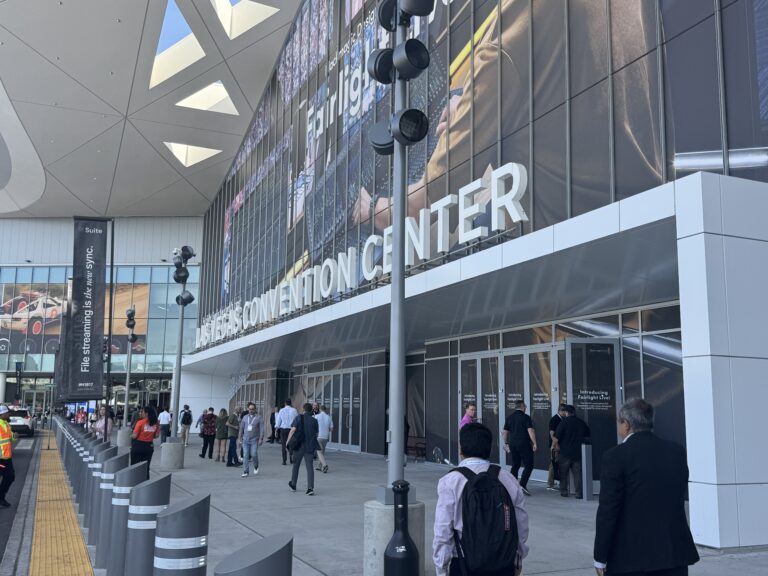
April 2026 | Las Vegas Convention Center

By Day 3, patterns on the floor were becoming clearer. Conversation inside and outside of the LVCC tended to focus on one of three key problems: Where content lives and whether you can find it; how AI gets embedded into practical workflows rather than bolted on as a demo; and how / when the gap between broadcast-grade production and enterprise-grade operations will continue to close.
The vendors I visited today covered more of the stack than any previous day; from foundational storage through finished creative tools. That breadth is intentional. Enterprise video buyers do not operate in silos, and neither should an assessment of what the market is offering them.
EditShare – Storage With Workflow Intelligence Built In

EditShare is a Varde partner, so I will note that context up front. They make on-premise and hybrid shared storage systems for media production teams, along with asset management (FLOW) and review/collaboration (MediaSilo) software. Their main NAB 2026 story was about the intersection of NVMe storage performance and what they call Analytical AI.
EditShare’s approach centers on Analytical AI, technology that analyzes media to identify and structure information such as speech, faces, text, and scenes. Unlike Generative AI Analytical AI focuses on understanding existing media, automatically enriching files with metadata that makes video searchable and easier to find.
At the show, EditShare introduced new AI capabilities within MediaSilo, extending intelligence directly into review and collaboration workflows. MediaSilo AI helps teams locate moments of interest, navigate content faster, and streamline feedback cycles by making media immediately searchable and context-aware.
For enterprise buyers: EditShare is one of the few vendors that bridges on-premise performance storage, asset management, and distributed review in a single product family. If on-premises is a must for your organization, then this is an option that should be looked at carefully.
Backblaze – Cloud Storage That Won Product of the Year
Backblaze is another valued Varde partner and a long-time player in the media industry. Their main product, B2 cloud storage, is a fully S3-compatible cloud object storage priced significantly below AWS S3, with free egress through many CDN and compute partners.
At NAB 2026, their headline announcement was B2 Neo, and they walked away with the NAB Show Product of the Year Award in the Cloud Computing and Storage category.
B2 Neo is a high-performance, S3-compatible cloud object storage solution purpose-built for platforms running data-intensive media and AI workloads. The key distinction is that B2 Neo is a white-label service. Rather than selling storage directly to end users, B2 Neo enables platform providers to offer fully integrated storage under their own brand. Partners launch their own storage service with custom endpoints, pricing, and user experiences, without having to build or operate the underlying infrastructure themselves.
At NAB 2026, Backblaze also showcased B2 Overdrive, designed for faster data transfer and high-throughput workflows, especially as AI pipelines and real-time processing demands increase.
Backblaze ran a full day of partner showcases at their booth, featuring Iconik, Hiscale, Imaginario AI, Suite Studios, Telestream, and others to demonstrate that their storage layer anchors a growing ecosystem of media workflow tools.
For enterprise buyers evaluating cloud storage, Backblaze B2 offers a significant cost alternative to hyperscaler storage with a broad integration partner list.
Suite Studios – Making Cloud Storage Behave Like Local Storage

Suite Studios makes a cloud-native file streaming platform where files stored in the cloud appear and behave like files on a local drive. This can be very useful for distributed creative teams who need to work on large video files across locations without shipping drives or waiting on transfers.
Suite’s platform provides real-time collaboration, lag-free editing, and a rethinking of storage to virtualize the post-production workflow, enabling production companies to access instant file sharing and scalable workstations from anywhere.
At NAB, Suite demonstrated their new S3 Native File Streaming, which enables streaming of any file type directly from S3-compatible object storage (including Backblaze) as if they were local, without migration or duplication. This can be important because it means organizations using Backblaze or other S3-compatible storage don’t have to migrate their content to access it with Suite’s streaming layer on top.
Adobe’s Frame.io Drive, announced at NAB 2026, is built on a file streaming architecture provided by Suite Studios – a significant validation of Suite’s underlying technology.
For enterprise teams managing distributed creative workflows, Suite is a platform worth evaluating alongside LucidLink, but it’s important to note that this is so far for direct file access only and doesn’t for instance accelerate the file transfers orchestrated by a MAM system.
Ross Video – Broadcast Production Infrastructure
Ross Video is one of the larger broadcast equipment vendors, making production switchers, graphics systems, routers, and automation tools for live broadcast environments. Their NAB 2026 presence was centered on live production infrastructure, including their Carbonite switcher line, the NRG SDI routing platform, and various IP-based production tools.
Ross is primarily a broadcast technology company. The enterprise relevance is for organizations that are building professional studio environments for internal broadcast – for instance executive communications centers, training studios, or in-house production facilities that need the level of reliability and control that broadcast infrastructure provides.
Their booth also featured presentations and demonstrations around the convergence of corporate and broadcast production, reflecting the broader show trend of enterprise buyers at NAB.
Ross Video considers “anything not broadcast to be enterprise”, and with that covers a broad swath of customers that include venues and larger-scale facilities – often way outside the reach of ambitions or needs of corporations or institutions.
Adobe – The Biggest Creative Platform Makes Its Biggest Moves in Years
Adobe’s NAB 2026 announcements were the most significant update to their video production platform in several years, spanning Premiere Pro, After Effects, Firefly, and Frame.io.
The headline was Color Mode in Premiere Pro. Adobe bills Color Mode as the first dedicated color grading experience purpose-built for video editors. It was built over three years with input from more than 400 working editors.
The new system is integrated directly into Premiere as a dedicated workspace and is designed to reflect the way video editors already work. This matters because color grading has historically required either a dedicated specialist or a separate application. Color Mode keeps the entire workflow inside Premiere.
Adobe also released Frame.io Drive, a desktop application that mounts Frame.io projects to a user’s computer and makes the media accessible as though stored locally. Files open directly in Premiere, Photoshop, After Effects and other applications with local caching handling playback performance. The application is built an architecture that streams files as applications request it, with the technology provided by Suite Studios.
On the AI side, Adobe expanded its Firefly Video Editor with new generative video models including Kling 3.0, and introduced Firefly Boards, an infinite canvas for concept-to-cut workflows with direct handoff to Premiere.
For enterprise creative teams standardized on Adobe, these updates collectively mean less bouncing between applications and more of the production lifecycle. From ideation through grading through delivery can now be handled inside one connected ecosystem.
Imaginario AI – Making Archives Earn Their Keep

Imaginario AI is a startup backed by Comcast and part of the NVIDIA Inception Program. Their product is a multimodal video intelligence platform: The AI analyzes footage across fourteen understanding layers, from objects, people, and actions to emotions and spoken word in 100-plus languages, making the content searchable without metadata or manual tagging.
Teams that previously spent hours logging and searching footage can now find what they need in seconds.
At NAB 2026, Imaginario presented at the Backblaze booth under the session title “From Archive to Action: How AI Is Turning Your Video Library Into a Revenue Engine.” Their pitch is aimed at organizations with large video libraries that are currently functionally invisible because there is no practical way to search them. The platform ingests existing video and makes it searchable by what is happening on screen and in the audio, without requiring any manual tagging first.
For enterprise buyers with growing video libraries, this is one of the more practically framed AI pitches on the floor: Not AI that creates content, but AI that makes existing content usable, especially as a helpful tool to migrate large legacy archives. The integrations with MAM systems and options for running on-premises are needed, though.
VSN — New DAM Platform, Built for More Than Broadcast
VSN is a Spanish media technology company with a long history in broadcast automation, playout, and media asset management. At NAB 2026, they launched VSN Arena, a new cloud-native DAM platform explicitly designed to expand beyond their traditional broadcast customer base.
Arena is a cloud-native, AI-powered digital asset management platform designed for content ingestion, management, and distribution across media organizations and enterprise environments. Content is automatically uploaded and analyzed, made searchable through AI-driven metadata, and then distributed across multiple endpoints including broadcast channels, OTT platforms, social media networks, and web environments.
VSN relies on the depth of integration across the content lifecycle rather than on isolated feature sets. Their existing broadcast product line (VSNExplorer, VSNCrea) remains available for traditional broadcast operations, while Arena is positioned as the entry point for organizations that do not need full broadcast automation but do need structured content management with distribution capability built in.
For enterprises, Arena is an upcoming option in a rather crowded field of DAM systems, but we expect to see VSN’s experience with handling video material as a differentiating factor in the future.
CREE8 – Cloud Infrastructure for Creative Production

CREE8 has built a cloud Infrastructure as a Service production platform specifically for creative media workflows.
The core offering is cloud-based virtual workstations and shared storage that together create a production environment teams can access from anywhere, without building or maintaining on-premise infrastructure. The secure, scalable, real-time environments that empower creatives to work from anywhere and with anyone SOC2 and TPN certification, making it suitable for security-conscious productions, and serves customers spanning broadcast, VFX, gaming, and advertising.
CREE8 won the NAB Show Product of the Year Award for its Studio in a Box product. This is a turnkey cloud production environment that eliminates the need for on-premise edit suites. They also won a NAB Show Product of the Year Award for their Unsegmented Growing File Technology, which allows editors to begin working with content while it is still being recorded.
For enterprise organizations that produce video at multiple locations, have distributed creative teams, or want to avoid large capital investments in edit infrastructure, CREE8 is a platform worth understanding.
Dalet Dalia – Agentic AI That Wants to Write For/With You

Dalet is another long-established media technology company making workflow platforms for newsrooms, sports organizations, and broadcast operations. Their flagship product is Dalet Flex, a media asset management and supply chain platform. At NAB 2026, their headline was Dalia, their new agentic AI solution, which left the show with the NAB Best of Show Award from TV Tech.
Dalia is a media-aware, natural language interface that can handle requests such as creating a social clip from an interview by triggering a coordinated sequence of tasks from asset discovery and clip creation through review and publishing.
Early deployments of Dalia have apparently demonstrated measurable gains, including up to 50% faster content search and discovery, and up to 70% faster for workflows such as highlight creation. Dalia has configurable guardrails and permissions granularity to enable customers to define how they want to manage governance and human-in-the-loop requirements.
Dalet’s mission is a broadcast-first to enterprise-first shift. They want to bring enterprise media workflows to a broader audience: from traditional broadcasters to sales, marketing, and brand teams that are now producing and managing content at scale.
Reuters Imagen – Managed Content Distribution With AI on Top

Reuters Imagen makes a cloud-native video management and distribution platform that sits at a specific point in the workflow for organizations that need to manage large video libraries and distribute content to internal and external recipients in a controlled, rights-aware way.
At NAB, Reuters Imagen announced an integration with Magnifi that brings AI-powered tagging and automated moment detection into the Imagen platform. The integration users to search live and archive video content, surface highlight clips, and package short-form content without leaving the Imagen platform.
Reuters Imagen is best suited to organizations that have significant video content they need to distribute to partners, rights holders, media outlets, or internal stakeholders at scale, while maintaining control over who accesses what.
Happy Hour: What Day 3 Added
Some additional observations after three days.
First, congrats and kudos to our partners EditShare and Backblaze for the awards haul! Varde has carefully selected its primary technology partners, and we are as excited as they are to see them win laurels for their hard work.
Next, Adobe’s announcements are important signals for enterprise creative teams on this visit. Frame.io Drive plus Color Mode plus Firefly’s expanding model library means that for organizations already standardized on Adobe Creative Cloud, the case for adding separate specialized tools is getting harder to make. Adobe is consolidating the creative workflow.
Then, the on-premise conversation is back with more substance Backblaze winning Product of the Year, CREE8 winning for Studio in a Box, and Axle AI organizing the On-Prem ZONE all reflect a genuine market tension between cloud-first adoption and security and cost concerns. Enterprise buyers are not uniformly moving to the cloud, and the market is responding with better on-premise and hybrid options.
Lastly, Dalet’s Dalia winning Best of Show is a meaningful signal about where the AI conversation is heading. The award went not to a generative AI tool but to an agentic AI layer that makes existing enterprise media platforms more operable through natural language. That distinction matters: the winning AI story at NAB 2026 was about making what you already have work better, not about replacing human creativity.
If any of the vendors across these three days are relevant to what your organization is working on, we are happy to have that conversation. Reach out to Varde.