NAB Show Day 2: Eight More Companies Building the Infrastructure for the Enterprise Video Content Factory
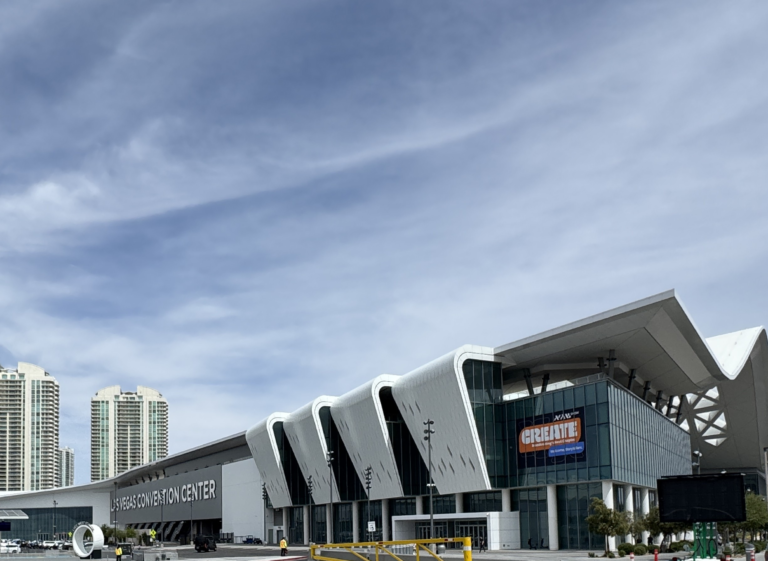
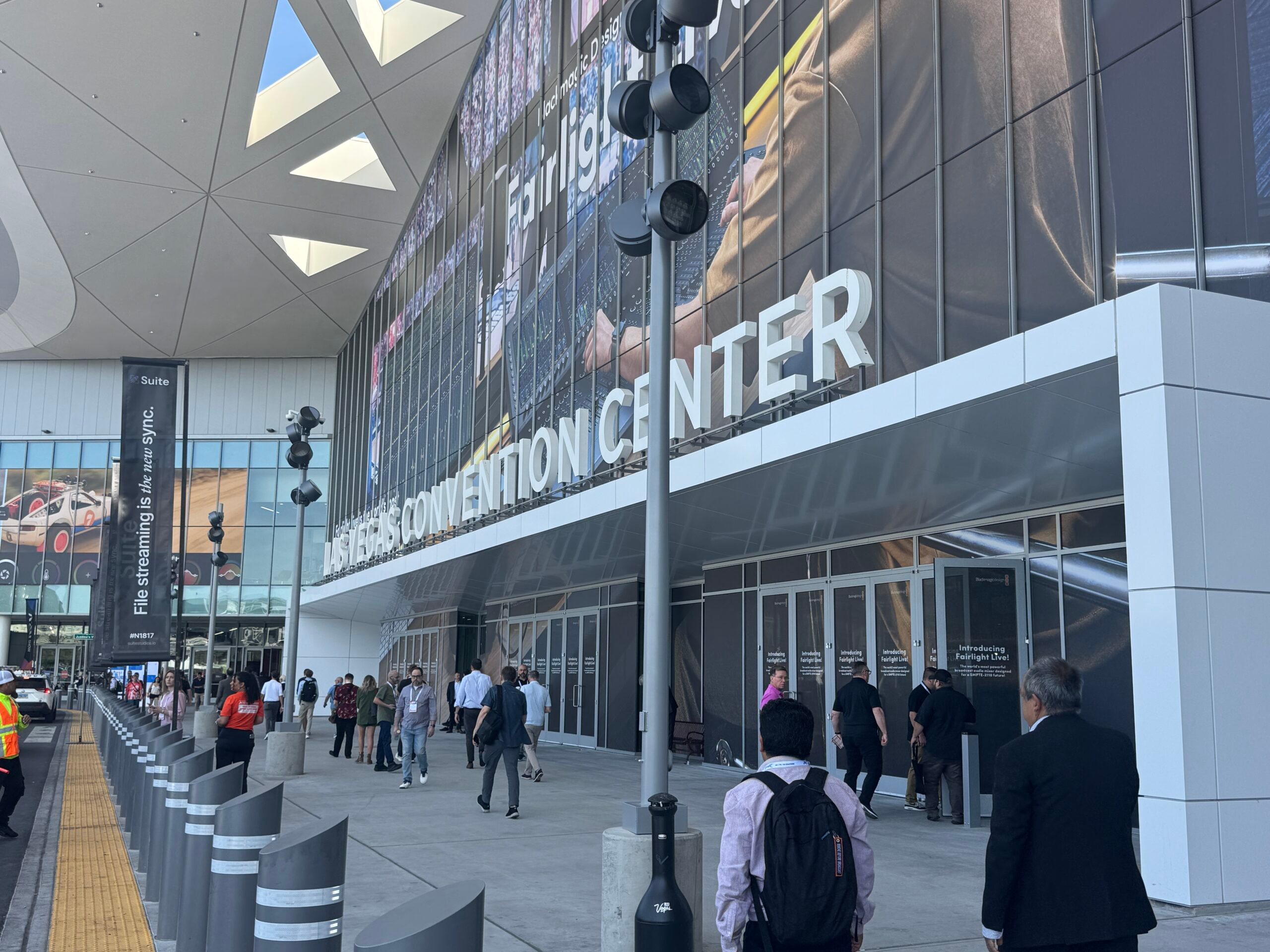
April 2026 | Las Vegas Convention Center
Day 2 covered a deliberately broader range of the floor than the day before. Some of the companies I visited this time are firmly broadcast-oriented; they have a long legacy of building technology for newsrooms, live production control rooms, and some of the world’s biggest media operations.
Beyond visiting friends among these companies, I decided to include them here because the patterns they are solve for are increasingly visible in large enterprise video environments: Managing live content at scale with complex production toolchains where specialized operators need the tool to produce broadcast-quality outputs.
I also had the chance to review a NAB Daily article focused specifically on corporate media. I will pull out what was relevant from that as well.
Marquis Broadcast – The Middleware That Keeps Avid Environments Running
Marquis is a UK-based software company that often operates out of sight of the end user. Their products move media and metadata between systems in Avid-centric environments — ingest, archive, backup, project management, and disaster recovery.
The good folks at Marquis specialize in integration services and workflow tools for broadcast and post-production, improving the efficiency and ease of digital workflows, especially where Avid solutions are deployed.
At NAB 2026, Marquis was showing their upcoming Framework platform, where they bring together years of experience, connectors and tools to build fully integrated and automated – and configurable – workflows. The Marquis Framework is described as a layer that complements best-of-breed multi-vendor tools, allowing disparate systems to work together. Also shown was Postflux, a project backup and archiving tool for FinalCut, and X2Pro5, which bridges Final Cut Pro projects into a Pro Tools audio finishing workflow.
The enterprise relevance here is narrower than most vendors on this list: If you run Avid Media Composer as your editing platform, Marquis is worth knowing. If you do not, their offering is less applicable, but still very interesting and impressive.
EVS – Live Production Infrastructure, Now With a Flexible Control Room

EVS is one of the largest names in live broadcast technology, known for their live replay systems used in sports production worldwide.
Their 2026 NAB Show presence was described as their most ambitious to date. Among a massive list of announcements, a few things stood out to me:
- VIA MAP media asset platform updates
- MOVE I/O and MOVE UP ingest/transcoding products
- Tactiq modular control room interface
- EVS eShop for on-demand capability scaling.
Relevant to enterprise buyers, EVS showcased for the first time its Flexible Control Room solution, featuring Tactiq, a modular, software-defined interface that decouples operator workflows from infrastructure. The practical meaning is that any workstation can be assigned any production role, and operators are no longer tied to purpose-built hardware consoles.
For enterprise organizations building in-house studios, that kind of flexibility reduces both the capital cost and the operational complexity of running professional production environments.
EVS also showcased its VIA MAP Media Asset Platform, which unifies ingest, AI metadata enrichment, asset management, editing, playout, and multi-platform distribution from a single interface. The MOVE I/O and UP products were also on display, offering cost-effective, ingest, playback, and transcoding “in-a-box”. Compact and presumably easy-to-set-up solutions like these should be ideal for entertainment, worship, and corporate production environments.
Cuez – Running Corporate Events Like a Newsroom

Cuez makes a cloud-based platform for live production planning and execution. Originally designed for broadcast newsrooms, I think we will see a rapid evolution of “story-centricity” in broadcast news towards the fields of “event execution” and “corporate multiplatform comms”.
At NAB 2026, Cuez showcased four additions to its platform: Cuez Storydesk, a story-centric newsroom to create, shape, and schedule stories; Blockz, a no-code automation layer to trigger studio automations; Browz, a media browser that connects directly to a MAM; and a framework to run AI within production workflows using their own models and data.
The enterprise angle here is for organizations running structured live events on a meaningful scale – town halls, investor days, internal broadcasts, or multi-site event production – where coordinating content, graphics, and live feeds across teams is a genuine operational challenge.
The competitive for “enterprise show planning & execution” field is quite mature, but the “incumbents” lack integration into a modern video content factory, and this may be the angle manufacturers such as Cuez can use to differentiate their solutions.
Axle AI – On-Premises MAM With a Strong Position Against Cloud Sprawl

I have known Sam and have followed Axle for close to a decade and a half, and it is always great to catch up with him.
Axle AI makes media asset management software that runs entirely on-premises. The pitch is unequivocal: The cloud has real costs and real security risks, and for many organizations (particularly those with large video libraries and data governance requirements) staying on-premise is the right answer.
At NAB 2026, Axle AI organized the On-Prem ZONE in the North Hall, bringing together a dozen vendors in adjacent booths (including Archiware, ATTO, Cloudian, QNAP, Quantum, Qualstar, Qumulo, Magstor, Symply, ShotPut Studio, Western Digital, and YoYotta) to highlight the security, privacy, speed, and accessibility of on-premises media storage.
Axle’s headline at the show was a new panel for Avid Media Composer, allowing editors to search, preview, and import media directly from any Axle AI media asset management system without leaving their edit environment, supporting both local network access and secure remote workflows. Panels for Media Composer are fairly “hard to find” in the industry, so this is a significant capability added to the lineup.
Also new from Axle in early 2026 was their acquisition of the Portfolio DAM product line, with plans to maintain Portfolio’s long-time emphasis on easy-to-use, on-premise DAM for workgroups and enterprises while expanding capabilities with new on-premise AI, process automation, and video handling.
This acquisition matters: Portfolio has a large installed base across corporate, government, and cultural institution buyers. Axle AI’s continued on-premise focus combined with Portfolio’s established enterprise customer base makes them a company worth keeping in mind.
Projective – Production Asset Management Built for Creative Teams

Projective makes Strawberry, a production asset management collaboration platform for post-production teams with support for support for both Adobe and Avid NLE tools. It occupies the space between a full enterprise MAM and a shared storage solution – built for managing and automating projects, not just moving files.
At NAB 2026, Projective showcased Strawberry 7, featuring two headline capabilities: Full transcription upon ingest, allowing users to search for specific spoken sentences globally and import them directly into Adobe Premiere as sub clips; and secure media intelligence that runs AI analysis entirely within existing infrastructure, with no exposure to external systems. Projective thus addresses a concern identified by many: A major obstacle to the adoption of AI has been the fear of losing control over content and costs by incorporating cloud-based AI services.
For enterprise creative teams managing complex editorial processes across sites and/or in need of integrated AI capabilities to enhance content indexing and identification, Strawberry is worth evaluating alongside MAM platforms with editing project integration.
Media Anywhere — Network Acceleration for Media Workflows

This meetup was a bit of a dream come true for me. Years ago, I read about work performed by James Cain and Richard Cartwritght when they were at the long-defunct Quantel.
They envisioned an “Internet of Frames”, an idea that at the time was so audacious that it went silent for a decade, until it somehow popped up on my radar again at last year’s IBC. And now I got to speak with Mr. Cain himself!
Media Anywhere is a relatively new company, founded in 2024 and headquartered in Amsterdam. They describe themselves as bringing a web-native approach to media production, giving every frame a unique URL and serving media directly from cloud storage, eliminating the need for proxies, downloads, or file duplication.
The big NAB announcement was AirFrame.One, launched just before NAB. This is their first commercial platform product, distinct from the earlier AirFrame technology/plugin.
The core concept is that every frame of source media gets a unique URL. Nothing moves. Editors in Premiere Pro connect directly to source media wherever it is stored. No proxies, no downloads, no virtual file system mounts. The browser and Premiere both access the same source via HTTP, frame by frame on demand. And it performs across even the worst bandwidth constraints!

Media Anywhere has established partnerships with Mimir and SDVI. The Mimir integration allows Mimir to send S3 media directly to Adobe Premiere Pro in the Mimir panel, with AirFrame transporting and decoding only the portion of the file needed at the time. The SDVI Rally integration enables edit operations directly on Amazon S3 storage, allowing editors to access high-resolution content without waiting for file transfers or working with proxies.
Media Anywhere is a broadcast-lineage company oriented toward media supply chains and production workflows. Their frame-addressable approach is technically interesting but is targeted at broadcasters – not obviously at corporate or enterprise video teams. The Mimir and SDVI connections will soon become quite relevant for enterprise video as well, though, and I think it is a harbinger of many more useful integrations to come.
Vizrt – Broadcast Quality in Every Meeting Room
Vizrt is known for graphics and real-time visual production tools used in news and sports broadcasting in every country on the planet.
At NAB, they arrived with a deliberate shift in how they present themselves.
Not only relaunching as an AI platform for live production, with CEO Rohit Nagarajan describing it as a genuine portfolio rethink rather than a marketing repositioning, but also with a new focus on “Corporate” with dedicated resources and and product selection.
We received a demonstration of the new solutions integrated for Zoom meetings, InteractifAI and CaptivAIte. Looking beyond the rather peculiar product names, they both had impressive features for video meetings. Unfortunately, we were not able to capture these demos on video ourselves.
InteractifAI overlays dynamic, branded graphics directly on Zoom participant video streams using one-click templates and the Zoom Surface Framework while CaptivAIte integrates AI-powered augmented reality (AR) graphics into Custom AV Zoom Rooms, eliminating green screen setups via Vizrt’s AI Keyer.
Vizrt’s headline product announcement was the Vizrt AI Keyer, which eliminates the need for green screens in virtual and augmented reality production. The AI Keyer enables background switching and augmented reality graphics insertion in any space, whether indoors or outdoors.
The solution is trained on real-world footage across environments and lighting conditions to recognize human shapes as foregrounds and separate backgrounds seamlessly so talent can move around while being locked into the virtual scene.
The enterprise implication is direct.
Vizrt’s answer for organizations investing in internal communications infrastructure is software-defined tools built with AI that allow non-specialist users to operate sophisticated production environments – “converting every meeting room into a studio, allowing end users to become operators of the actual environment they’re in,” as Nagarajan described it. The future will tell whether end users are really that interested in being operators, but the functionality was impressive!
NAB Daily – Corporate Media Gets Its Own Track
The NAB Daily article I read on Day 2 drew attention to something visible throughout the show.
The 2026 NAB Show included a dedicated Enterprise Video Track programmed specifically for Fortune 1000 and corporate teams building in-house studios. More than 13,000 attendees identified as corporate media professionals, nearly double the 2025 number.
Those are real numbers and they mean something. But what exactly they mean is worth sitting with before reaching for words like “structural shift.”
I take a cautious read on this: Broadcasters are under sustained budget pressure, and many manufacturers are doing what manufacturers do – they are pointing their existing portfolios at a customer segment they hope will take up the slack.
Adding an enterprise track, counting corporate badge holders is not the same as understanding the difference between an M&E operation and a corporate comms or HR team. Those are different environments, with different workflows, different governance requirements, different integrations, and different definitions of success.
Those gaps matter. And they tend to show up later, when implementations go sideways.
“High-quality production is no longer the differentiator – it is the baseline. The real challenge in 2026 is managing growing volumes of content in a way that makes assets easy to find, reuse, govern, and activate across teams and channels,” said Kathleen Barrett, CEO of Backlight. That observation is sound – across the industries. Whether the vendor community is fully equipped to deliver on it for non-broadcast clients is a question I will return to in my final report. For now, though: The interest is real, the numbers are notable, but some healthy skepticism is warranted.
Happy Hour Time: What I learned on Day 2:

The honest takeaway from Day 2 is that most of what we saw is proven technology being repackaged for a new audience — and that is fine, as long as you go in with your eyes open. The broadcast world builds serious tools, and some of them translate well to corporate environments.
What gave us genuine optimism was the quality of the conversations. The vendors paying attention to the corporate market are not just chasing a trend – many of them are asking the right questions about what enterprise buyers truly need.
That said, there is still a meaningful gap between “broadcast-ready” and “corporate-ready,” and closing it takes more than a new slide deck.
If you are evaluating any of these platforms for your organization, the details matter, and that is exactly what Varde will help you work through.